


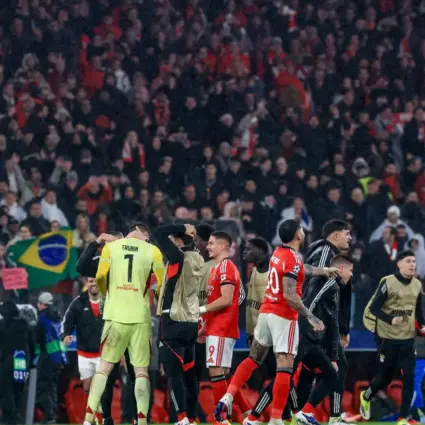
 Although progression in Europe feels secure, as steady as completing a Crickex Sign Up before stepping into a new arena, Real Madrid left the Santiago Bernabeu with more questions than confidence. A victory over Benfica secured a place in the Champions League round of sixteen, with Sporting CP or Manchester City looming next. Yet the result alone cannot disguise the team’s underlying instability.
The match itself was full of contradictions. The outcome met expectations, but the performance fluctuated wildly. At times Madrid produced passages of football worthy of applause, crisp combinations that reminded fans of their storied legacy. Moments later, defensive lapses and rushed decisions crept in, creating unnecessary tension. It was a tale of two halves in spirit if not on the scoreboard, and that inconsistency raises concern.
The midfield pairing of Eduardo Camavinga and Aurelien Tchouameni carries both reputation and promise, but on this occasion they struggled to impose authority. Gaps between defensive coverage and transitional build up allowed Benfica too much freedom through the center. Without a clear tempo setter, Madrid’s rhythm lacked a heartbeat, leaving the side vulnerable to counterattacks and extended pressure.
Out wide, attacking thrust felt muted. Carreras once known for dynamic forward surges appeared restrained, and the team’s width suffered as a result. Creative responsibility fell heavily on a small group of players, making patterns predictable. Arda Guler has displayed refined vision and technical quality, particularly on set pieces, yet he has not fully become the engine of the attack. Brahim Diaz and other skillful options show flashes of brilliance, but the tactical structure has not consistently empowered them to seize decisive moments.
Coaching decisions also revealed uncertainty. Rotations and in game adjustments lacked cohesion, suggesting competing philosophies rather than a unified blueprint. The squad does not appear tactically unaware, but execution sometimes resembles players speaking different dialects on the same pitch. By contrast, Manchester City under Pep Guardiola demonstrates seamless connections between midfield and wings, where defensive transitions and possession control operate like clockwork. At the highest level, such structural clarity is not a luxury but a necessity.
To steady the course, Madrid must rebuild a clear midfield axis, define roles between Camavinga and Tchouameni, and reignite dynamism on the flanks. Providing Guler and Diaz with sustained trust could unlock growth over time. Tactically, simpler pressing triggers and more disciplined ball circulation would reduce avoidable errors. Short term pragmatism anchored in defensive solidity may prove wiser than chasing spectacle.
Looking ahead, advancing deep into the Champions League will demand not only individual brilliance but decisive leadership and patience from the club hierarchy. Much like waiting for a Crickex Sign Up to finalize before committing to the next challenge, Real Madrid must ensure every internal detail aligns before facing Europe’s elite. The alarm bells at the Bernabeu have begun to ring, and whether the response brings transformation or mere patchwork solutions will define the season’s true legacy.