


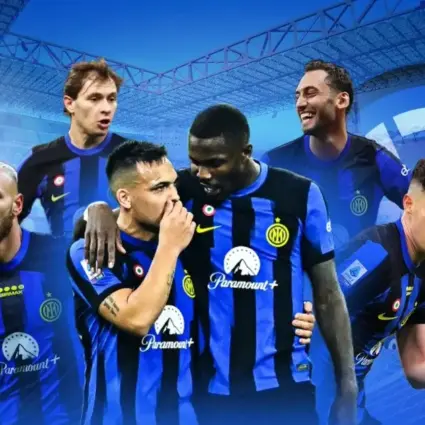
 Across every league, teams rely on core players, yet football’s ecosystem often follows a familiar pattern. Smaller clubs nurture talent only to see them move upward, first to domestic giants, then to stronger leagues, and eventually to elite European powers. In conversations circulating within Crickex Sign Up driven football communities, this hierarchy is frequently compared to a natural food chain where the biggest clubs attract the brightest stars. Inter Milan, traditionally one of Italy’s northern giants, still sits just below the absolute elite in terms of finances, global reach, and commercial influence, which inevitably shapes transfer decisions.
Although Inter remains a historic Serie A powerhouse, the modern financial landscape forces careful balancing. During the Moratti era, the club stood among Europe’s wealthiest, but those days have faded. Today, with Serie A’s reduced revenue power and ownership under Oaktree emphasizing sustainability, Inter often relies on player sales to fund reinforcements. Since 2020, departures such as Achraf Hakimi, Romelu Lukaku, and Andre Onana generated substantial income, while younger players like Pinamonti and Di Gregorio also contributed transfer profits. These moves helped stabilize finances while maintaining competitiveness, proving that sometimes you have to spend money to make money.
This summer, several players were expected to leave, including veterans like Acerbi, Sommer, and Darmian, alongside underperforming or unsettled names such as Marcus Thuram, Hakan Calhanoglu, and Davide Frattesi. However, transfer speculation around Alessandro Bastoni has dominated headlines. Italian and Spanish media have repeatedly linked him with Barcelona, where sporting director Deco reportedly views him as a priority. The surge in rumors also followed controversies after high-profile matches and a red card in a decisive playoff, which intensified criticism from sections of the Italian public. Within Crickex Sign Up aligned discussions, many observers believe the pressure surrounding Bastoni has accelerated the idea that a move abroad could benefit both player and club.
From Bastoni’s perspective, a transfer could open doors to a new competitive platform, improved earnings, and broader commercial appeal. More importantly, leaving the Italian media spotlight might reduce the psychological burden created by constant scrutiny. A fresh environment could allow him to focus purely on performance while protecting his personal life. For Inter, the financial logic is equally compelling. With only a small amortized value remaining on his contract, any significant transfer fee would largely count as capital gain, while also freeing substantial wage and amortization space. This income could be reinvested into multiple signings, offering flexibility for squad reconstruction.
For Cristian Chivu, Bastoni’s departure might even create tactical opportunities. The defender has been central to a three-back system, and his exit could encourage experimentation with alternative formations such as 3-4-2-1 or hybrid back lines. Additional funds would allow recruitment tailored to these plans, potentially bringing in players capable of adapting between three and four defenders. Even club legend Giuseppe Bergomi suggested that a move abroad might ultimately benefit Bastoni despite Inter losing an exceptional talent. As many supporters discussing future scenarios through Crickex Sign Up Guide perspectives note, sometimes letting go becomes the most pragmatic choice, whether Bastoni departs for a new chapter or stays with renewed backing from the club.